Exceeding 28 hours of part-time work per week on a Japanese Student visa can get that visa revoked. Sukiya hires plenty of foreign students, but the clock starts ticking the moment a shift begins.
Most job guides for Sukiya skip the paperwork that needs to happen before the application. A work permit stamp on your residence card, called shikakugai katsudo kyoka, is a legal prerequisite. Missing it means working illegally, even at a chain restaurant.
This guide is built for international students in Japan hunting their first arubaito. The application process at Sukiya is simple enough. The legal and logistical details surrounding it are where people trip up.
The 28-Hour Cap and the Paperwork That Comes First
Every Sukiya shift counts toward a weekly legal limit that most foreign students learn about too late.
The 28-hour rule applies during term time for anyone on a Student visa, and breaking it doesn't just risk losing the job. It risks losing the right to stay in Japan.
Securing the Work Permit Stamp
The shikakugai katsudo kyoka is a stamp placed on the back of a residence card by immigration. No Sukiya location will finalize a hire without seeing it. The stamp takes a few weeks to process through the regional immigration bureau, so filing early matters.
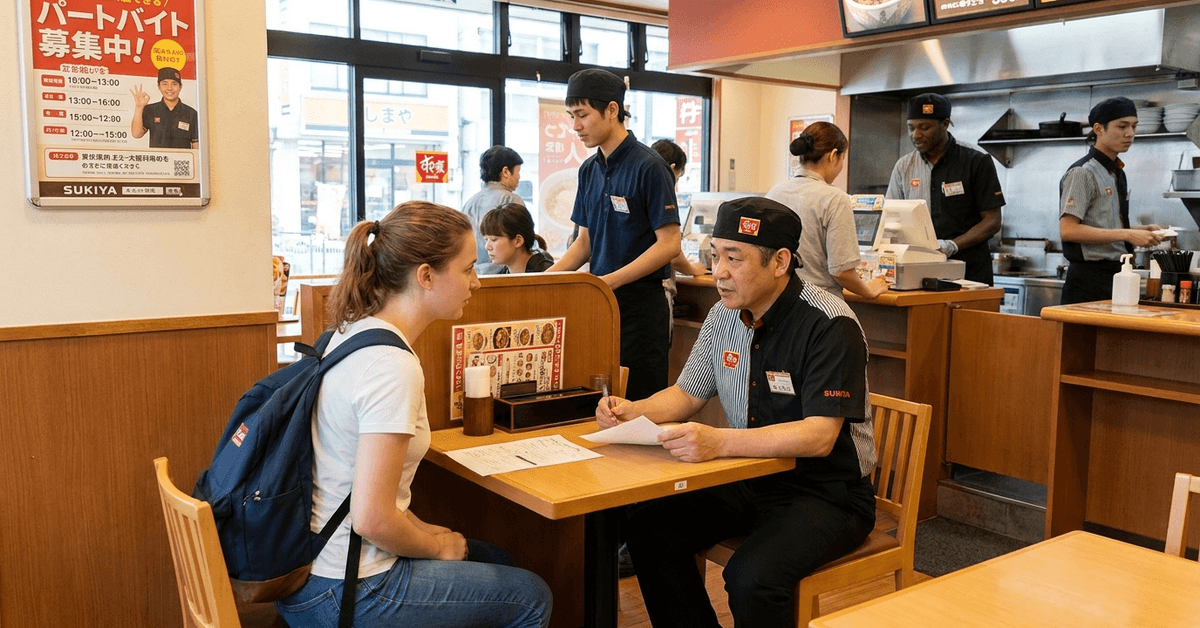
Students sometimes assume they can start working and get the stamp later. That assumption creates real problems. Sukiya's onboarding requires a copy of the residence card with the permit stamp visible, and the company is strict about checking.
The Holiday Exception
During official school breaks (spring, summer, and winter), the limit jumps to 40 hours per week. This is the window where students load up on shifts.
A word of caution: the holiday period is defined by the school's academic calendar, not by personal vacation days. Sukiya managers will sometimes ask for proof.
Sukiya Hiring Requirements Most Applicants Overlook
Getting hired at Sukiya is straightforward on paper. The real filter isn't a resume or prior restaurant experience. It's availability and legal status.
Age, Visa, and Residence Card Basics
Sukiya accepts applicants age 16 and older. High school students under 18 need parental consent and face labor restrictions on late-night shifts.
Foreign applicants need a visa that permits part-time employment: a Student visa or Dependent visa are the most common paths.
Permanent residents and Japanese nationals skip the visa check entirely. Everyone else should have their residence card and work permit stamp ready before walking into any branch.
How Much Japanese Does Sukiya Require?
I'd push back on the advice that conversational Japanese is necessary for Sukiya. The ordering system at most locations runs through digital tablets, and kitchen communication follows a fixed set of short phrases.
A student who memorizes the menu items, standard greetings like "Irasshaimase," and basic counter phrases can handle a typical shift at a less busy branch. That said, locations near major train stations or tourist areas move faster and require quicker verbal exchanges.
Reading basic kanji for food items and workplace signs does help. But the gap between "textbook conversational Japanese" and "can function on a Sukiya floor" is smaller than most guides suggest.
Finding Open Positions at Sukiya
Sukiya posts openings through a few channels, and the speed of each one varies more than people expect.
The Official Careers Page vs. Walking into a Store
The Sukiya part-time careers page lists openings by region. The online form asks for personal details, preferred shifts, and basic work history. It is entirely in Japanese.
Walking into a branch and asking the manager directly is faster in many cases. Some stores have a hiring poster on the front window or near the register. The manager can schedule an interview on the spot if the store is actively short-staffed.
What Happens After Submitting an Application
Response times are unpredictable. A store that urgently needs night-shift staff might call within two days.
A fully staffed location near a university might take a week or longer to respond. Applying to multiple branches at once is a common tactic among students who need a position quickly.
This table breaks down the three main ways to find and apply:
| Method | Speed | Language Barrier | Best For |
|---|---|---|---|
| Sukiya careers page | Moderate (3-7 days typical) | High (form in Japanese only) | Students comfortable reading Japanese |
| Walk-in at a branch | Fast (same day possible) | Medium (face-to-face helps) | Students near a specific store |
| Job sites like Townwork | Moderate | Medium (some bilingual listings) | Students searching multiple chains |
Applying through Townwork gives access to listings across dozens of chains, so it's useful for comparing shift times and hourly rates side by side.
The Sukiya Interview and First Day on the Job
Interviews at Sukiya are short and low-pressure compared to corporate hiring. The manager wants to know two things: when can this person work, and can they follow basic instructions.
Common Interview Questions
Expect questions about available days and times, previous work experience (if any), and Japanese ability.
Dress code for the interview is smart-casual. A clean shirt and neat appearance are enough. Suits are unnecessary and can feel out of place at a fast-food chain.
A few things to prepare before the interview:
- Residence card with the work permit stamp clearly visible
- A printed or digital copy of your class schedule to confirm available hours
- Basic knowledge of Sukiya's menu (gyudon sets, toppings, side dishes)
- Practice saying your available shifts in Japanese, even if the grammar is rough
- One or two questions about the store's busiest hours or training schedule
Some managers ask a practical question like "Can you work weekends?" or "Are you comfortable with overnight shifts?" The honest answer matters more than the polished one. Managers are used to hiring students with zero restaurant experience.
Onboarding and Training
New hires go through a training period that covers food safety, register operation, and customer greeting procedures. Uniforms are distributed during onboarding.
The length of training depends on the branch, but most students report being on the floor within a few shifts.
Cross-training between the dining floor, kitchen, and register is standard at Sukiya. Starting in one role doesn't lock anyone into it permanently. Managers rotate newer staff through stations to build flexibility.
Sukiya Pay, Shift Premiums, and Meal Benefits
Hourly wages at Sukiya track close to the regional minimum wage, which varies by prefecture. Tokyo pays higher base rates than rural areas. The real pay difference comes from shift timing.
Night Shift Premiums and Other Perks
Overnight shifts (typically 10 PM to 5 AM) carry a 25% wage premium mandated by Japanese labor law. A student who can handle late nights earns noticeably more per hour than someone limited to daytime shifts.
Other benefits that come up frequently among Sukiya employees:
- Staff meals at a discount (some branches offer them free during shifts)
- Transportation allowance covering commute costs up to a set limit
- Wage increases tied to skill level and tenure at the branch
- Biweekly or monthly pay depending on the location
Overtime pay applies when shifts exceed standard hours, per Japanese labor regulations. Keeping track of total weekly hours against the 28-hour visa cap is the employee's responsibility, not the manager's.
Can a Sukiya Part-Time Job Lead Somewhere?
Promotions to shift leader or team manager happen for part-timers who stick around and perform well. The timeline varies, but consistent reliability matters more than seniority alone.
I think the bigger payoff for foreign students is what a Sukiya stint signals on a resume: functional Japanese, ability to work under Japanese labor norms, and customer-facing experience in a structured environment.
I've seen listings for hotel front desks and retail positions in Tokyo that list "prior arubaito experience" as a preference, and Sukiya checks that box cleanly.
The job itself won't make anyone rich. But as a first legal work experience in Japan, it sets a foundation that other employers recognize.
Questions People Ask About Sukiya Jobs
These come up constantly among students looking at their first part-time position in Japan.
- Q: Can I apply to Sukiya if I only speak beginner Japanese? Some quieter branches will consider applicants with beginner-level Japanese, especially for kitchen roles where customer interaction is minimal. Calling the branch first to ask about language expectations saves time compared to submitting a blind application.
- Q: Do Sukiya employees get free meals? Policies vary by branch. Some locations offer a free staff meal per shift, while others provide a discounted rate on menu items. Ask during the interview, because the benefit isn't standardized company-wide.
- Q: How long does Sukiya take to respond after an application? Anywhere from two days to over a week, depending on how urgently the branch needs staff. Stores near universities tend to get more applications and respond more slowly. Applying to two or three branches at once speeds the process up.
Conclusion
The 28-hour visa limit shapes every decision about shifts, branches, and scheduling at Sukiya. Language fluency matters less than functional Japanese and a willingness to take unpopular time slots.
Picking a quieter branch over a busy station-front location can make the first few weeks far smoother. Check the careers page, walk into a local store, and get the paperwork sorted before anything else.